Guides N5
L2 : Ici, là, et vers l'au-delà
Indiquer et identifier des lieux dans le monde
Ici, là, et vers l'au-delà
Dans ce chapitre, nous allons découvrir une autre série de mots こそあど.
Alors que これ, それ et あれ s'emploient pour désigner des objets, ここ, そこ et あそこ s'emploient pour désigner des lieux. Ils correspondent approximativement à « ici », « là » et « là-bas ».
Grammaire dans ce Guide
ここ
Ici (Proche du locuteur)
ここ est un pronom démonstratif qui fait partie de la même famille de mots que これ, utilisé pour identifier un lieu proche du locuteur. De la même manière que これ correspond à « ceci », ここ correspond à « cet endroit » ou simplement à « ici ».
Le saviez-vous ?
La famille complète des pronoms démonstratifs en japonais est appelée こそあど言葉 (les mots KO, SO, A, DO). Elle inclut toutes les différentes formes de これ, それ, あれ, et どれ.
Attention
ここ ne doit pas être confondu avec こっち, un mot similaire qui peut parfois aussi être traduit par « ici ». こっち se concentre davantage sur la direction dans laquelle on va, tandis que ここ se concentre uniquement sur « cet endroit-ci ».
そこ
Là (Proche de l'interlocuteur)
そこ est un pronom démonstratif appartenant à la même famille de mots que それ et servant à identifier un endroit proche de la personne qui écoute. De la même manière que それ correspond à « cela » ou « ce », そこ correspond à « cet endroit-là », ou tout simplement « là ».
De la même façon que それ peut être utilisé pour faire référence à quelque chose mentionné précédemment, そこ peut être utilisé pour faire référence à un endroit mentionné précédemment.
Attention
そこ ne doit pas être confondu avec そっち, un mot similaire qui est parfois aussi traduit par « là ». そっち met l'accent sur la direction dans laquelle quelqu'un se dirige, tandis que そこ met uniquement l'accent sur « cet endroit-là ».
あそこ
Là-bas (Loin du locuteur et de l'interlocuteur)
Tout comme ここ et そこ, あそこ est un pronom démonstratif utilisé en japonais pour identifier un lieu. Le lieu que あそこ identifie est un endroit qui est éloigné à la fois du locuteur et de l'interlocuteur, physiquement ou émotionnellement. On peut le traduire par « cet endroit là-bas » en français.
De la même façon que あれ peut être utilisé pour faire référence à quelque chose mentionné précédemment, あそこ peut être utilisé pour faire référence à un lieu déjà évoqué. Cependant, contrairement à それ ou そこ, あれ et あそこ ne seront utilisés de cette façon que lorsque le locuteur et l'interlocuteur ont tous deux une compréhension intime du sujet.
Attention
あそこ ne doit pas être confondu avec あっち, un mot similaire qui est parfois également traduit par « là-bas ». あっち met davantage l'accent sur la direction que l'on prend, tandis que あそこ se concentre simplement sur « cet endroit-là ».
Détails
Maintenant que nous avons compris le principe général des mots こそあど, examinons notre schéma de déixis japonaise (schéma des relations spatiales dans la langue) afin de mieux comprendre le fonctionnement de la langue japonaise dans son ensemble.
Tout est une question de point de vue
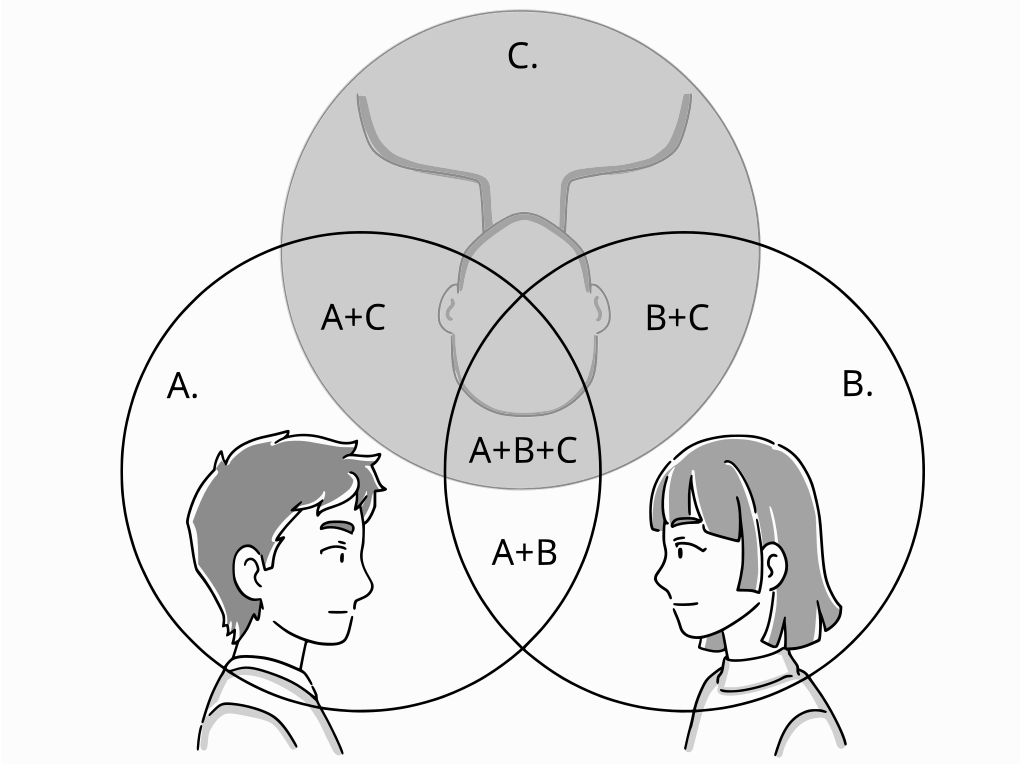
A - Information liée au locuteur et à son environnement.
B - Information liée à l'interlocuteur et à son environnement.
C - Information liée à un élément extérieur aux deux interlocuteurs.
A+B - Information connue du locuteur et de l'interlocuteur.
A+C - Information connue du locuteur, mais extérieure à l'interlocuteur.
A+B+C - Information connue des deux interlocuteurs et partagée par eux.
B+C - Information connue de l'interlocuteur, mais extérieure au locuteur.
Pour ne pas compliquer les choses, retenons simplement que こ, そ et あ représentent ici n'importe quel mot de la série こそあど, qu'il s'agisse d'un objet, d'un lieu ou d'une idée.
Les mots en こ se rapportent toujours au point de vue du locuteur, les mots en そ au point de vue de l'interlocuteur, tandis que les mots en あ peuvent désigner soit quelque chose que les deux interlocuteurs connaissent, soit quelque chose qui est éloigné des deux.
En japonais, les sujets, les pronoms et d'autres éléments sont souvent omis. L'une des raisons est que le système こそあど est naturellement présent dans toute conversation. Employer l'un de ces mots suffit donc à indiquer immédiatement à l'interlocuteur le type de relation que le locuteur entretient avec ce dont il parle.
C'est notamment pour cette raison que あれ peut parfois donner l'impression que le locuteur cherche à prendre ses distances avec quelque chose (A+C), lorsque la chose désignée n'est pas connue de l'interlocuteur (A+B+C). C'est un peu comme si le locuteur disait : « Cette chose que je connais mais que je ne veux pas considérer comme faisant partie de moi ». En revanche, lorsque le locuteur et l'interlocuteur savent tous deux de quoi il s'agit, あれ correspondra plutôt à la situation A+B+C : « Nous savons tous les deux de quoi je parle... inutile de le préciser ».
Nous étudierons ど plus en détail un peu plus tard. Pour l'instant, retenons simplement qu'il sert principalement à poser des questions.
Tracas de touriste
--:--
サリー:「すみません。八百屋はここですか?」
ももこ:「ここは銀行です。八百屋はあそこです!」
サリー:「あそこ…。赤い建物ですか?」
ももこ:「あ、それは神社です!有名な日本の神社ですよ。八百屋はあそこの建物です!」
サリー:「見えます!ありがとうございます!」
ももこ:「いいえ。あ、そこも有名なレストランですよ!肉、魚も美味しい。パンもコーヒーも有名です。」
サリー:「ありがとうございます!晩ご飯は肉を食べます!」
ももこ:「行ってらっしゃい!」