Guías de N5
L2: Aquí, ahí y allí
Señalar e identificar lugares en el mundo
Aquí, ahí y allí
En esta Guía vamos a conocer otro grupo de palabras こそあど.
Ya conoces これ, それ y あれ (esto, eso y aquello), que se usan con objetos. ここ, そこ y あそこ funcionan igual, pero para señalar lugares: es la misma lógica que ya usas en español con aquí, ahí y allí.
Gramática en esta Guía
-
こっちに来ますか?¿Vienes (hasta) aquí? (Se centra en el movimiento).
-
ここに来ますか?¿Vienes aquí? (Se centra en el lugar).
-
そっちです。Está ahí. (Se centra en el movimiento).
-
そこに置く。Ponlo ahí. (Se centra en el lugar).
ここ
Aquí, Este lugar
ここ pertenece a la misma familia de palabras que これ y se usa para identificar un lugar cercano al hablante. Así como これ corresponde a ‘esto/este/esta’, ここ corresponde a ‘este lugar’ o simplemente a ‘aquí’.
¿Sabías que…?
A la familia completa de palabras que se usan como identificadores o demostrativos en japonés se les llama こそあど言葉 (palabras KO, SO, A, DO). Esta familia incluye todas las diferentes formas de これ, それ, あれ y どれ.
¡Ojo!
No se debe confundir ここ con こっち, una palabra que se le parece y que a veces también se traduce como ‘aquí’. こっち se centra más en la dirección en la que se está yendo (dinámico), mientras que ここ se centra simplemente en ‘este lugar’ (estático).
そこ
Ahí, Ese lugar
そこ pertenece a la misma familia de palabras que それ y se usa para identificar un lugar cercano al oyente. Así como それ corresponde a ‘eso/ese/esa’, そこ corresponde a ‘ese lugar’ o simplemente a ‘ahí’.
Igual que それ se puede usar para referirse a cosas que fueron mencionadas antes en la conversación, そこ se puede usar para referirse a un lugar mencionado antes.
¡Ojo!
No se debe confundir そこ con そっち, una palabra que se le parece y que a veces también se traduce como ‘ahí’. そっち se centra más en la dirección en la que se está yendo (dinámico), mientras que そこ se centra simplemente en ‘ese lugar’ (estático).
あそこ
Allí, Aquel lugar
De la misma manera que ここ y そこ, あそこ es una palabra que se usa en japonés para identificar un lugar. El lugar que あそこ identifica es uno que está lejos tanto del hablante como del oyente, tanto física como emocionalmente. Se puede traducir como ‘allí, aquel lugar’.
Igual que あれ se puede usar para hacer referencia a algo que se mencionó previamente, あそこ se puede usar para hacer referencia a un lugar mencionado con anterioridad. Sin embargo, a diferencia de それ o そこ, あれ y あそこ se pueden usar de esta manera solo cuando tanto el hablante como el oyente tienen un conocimiento de primera mano del asunto.
¡Ojo!
No se debe confundir あそこ con あっち, una palabra que se le parece y que a veces también se traduce como ‘allí’. あっち se centra más en la dirección en la que se está yendo (dinámico), mientras que あそこ se centra simplemente en ‘aquel lugar’ (estático).
Detalles
Ya entendemos la idea básica de las palabras こそあど. Es momento de ver el diagrama que te prometimos: nuestro diagrama de deixis japonesa (un mapa de las relaciones espaciales del lenguaje), que nos va a ayudar a entender un poco mejor cómo funciona el japonés en conjunto.
Todo en su lugar
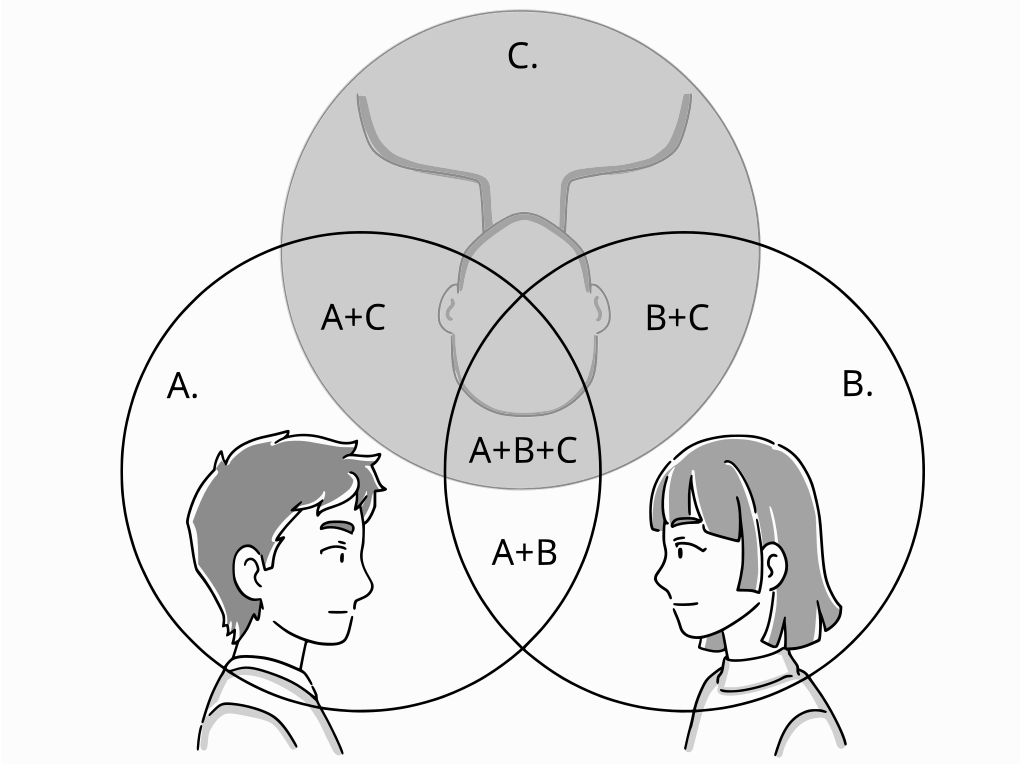
A - Conocimiento íntimo de こ.
B - Conocimiento íntimo de そ.
C - Conocimiento íntimo de あ.
A+B - Conocimiento íntimo de こ y そ.
A+C - Conocimiento íntimo de こ y あ.
A+B+C - Conocimiento mutuamente íntimo entre los tres.
B+C - Conocimiento íntimo entre そ y あ.
Para simplificar: こ, そ y あ representan cualquiera de las palabras こそあど de este diagrama, sin importar si se trata de una cosa, un lugar o un concepto.
Las palabras こ siempre parten del marco de referencia del hablante; las そ, del oyente; y las あ pueden remitir a un conocimiento compartido, o a algo distanciado de ambos.
En japonés es común omitir sujetos y pronombres. Una de las razones es que el sistema こそあど ya está presente, de forma implícita, en toda conversación: basta con usar cualquiera de estas palabras para que el oyente entienda de inmediato qué relación tiene el hablante con eso a lo que se refiere.
Por eso, cuando alguien usa あれ para algo que en realidad no es conocimiento compartido (A+C, no A+B+C), puede sonar como si buscara distanciarse de eso un poco: es como decir «Ah... eso que yo sé, pero que prefiero no sentir tan mío». Cuando, en cambio, el hablante y el oyente sí conocen bien el asunto (A+B+C), あれ suena más bien a complicidad: «Los dos sabemos de qué hablamos... no hace falta decirlo».
A las palabras que empiezan con ど, como どれ («¿cuál?»), las vamos a ver con más detalle más adelante. Por ahora, basta con saber que sirven, sobre todo, para hacer preguntas.
¿Dónde está la verdulería?
--:--
サリー:「すみません。八百屋はここですか?」
ももこ:「ここは銀行です。八百屋はあそこです!」
サリー:「あそこ…。赤い建物ですか?」
ももこ:「あ、それは神社です!有名な日本の神社ですよ。八百屋はあそこの建物です!」
サリー:「見えます!ありがとうございます!」
ももこ:「いいえ。あ、そこも有名なレストランですよ!肉、魚も美味しい。パンもコーヒーも有名です。」
サリー:「ありがとうございます!晩ご飯は肉を食べます!」
ももこ:「行ってらっしゃい!」