Guías de N5
L2: No, pero con mucho gusto
Formar y usar las formas formal y negativa de los verbos
No, pero con mucho gusto
En esta Guía vamos a aprender a unir verbos auxiliares a verbos comunes.
Los verbos auxiliares son palabras dependientes (palabras que no pueden usarse solas, sino que necesitan apoyarse en otra) que se unen a otras palabras para modificar su significado o matiz. En esta Guía nos vamos a centrar en ます y ない. ます nos permite expresar los verbos de forma formal, mientras que ない nos permite decir que algo «no» está pasando.
También veremos la versión negativa formal (ません) y la versión negativa semiformal (ないです).
Gramática en esta Guía
ます
Conjugación formal
Cuando se estudia japonés de la manera tradicional, ます se presenta como algo que se agrega a un verbo para crear la 'conjugación formal'. Si bien esto es así, es conveniente mirar más de cerca la naturaleza de ます para entender mejor este concepto.
ます es un verbo auxiliar, lo que significa que es una palabra que se agrega a otras palabras para alterar el significado de estas. En el caso de ます, lo que se altera es otro verbo, dando lugar a la conjugación formal. Para usar ます, agrégalo a la forma conjuntiva de un verbo.
Debido a que la mayoría de los estudiantes ven ます tan temprano en su aprendizaje, la 'forma conjuntiva' a menudo aparece como 'forma ます' o 'raíz ます' en muchos recursos, ya que, de esa manera, se facilita recordar cómo conjugar el verbo.
En esencia, ます es a los verbos lo que です es a los sustantivos y adjetivos. Ambos son verbos auxiliares y constituyen la base del lenguaje formal en japonés.
¡Ojo!
En general, です y ます solo aparecen al final de una oración. Sin embargo, se dan casos en el lenguaje extremadamente formal en los que aparecen delante de una partícula conjuntiva (como が, 'pero').
¿Sabías que…?
Se cree que el origen de ます es el verbo 参らす 'hacer humildemente'. Con el paso del tiempo cambió a まらす, luego a まっす y finalmente a ます. 参る en sí mismo es un verbo del lenguaje humilde que significa 'venir' y que se sigue usando con mucha frecuencia en el japonés moderno.
¿Sabías que…?
Según avances en tu estudio, encontrarás a menudo la forma imperativa de ます, ませ, en diferentes expresiones hechas, siendo いらっしゃいませ la más conocida. ¡Trataremos ませ con mayor profundidad en una lección posterior!
Verbos る (Ichidan) - Forma Negativa y ません
No haré/hago/hace
Como vimos anteriormente, los Verbos る (Ichidan) son aquellos que tienen un solo patrón de conjugación que consiste en el reemplazo del kana final る por la construcción gramatical deseada.
La conjugación negativa se consigue eliminando る y agregando ない, para la versión sencilla, o ません, para la versión formal.
Aunque la traducción común de ない y ません es simplemente ‘no’, en realidad poseen varios matices posibles. Estos son ‘habitualmente no’ (no hago), ‘intencionalmente no’ (no lo haré) o ‘involuntariamente no’ (no puedo hacerlo).
Ambos ない y ません son verbos auxiliares (ません es una conjugación de ます) y tienen sus propias reglas de conjugación.
Es posible usar una versión semiformal agregando です a ない, resultando en ないです. Aunque en este caso です se usa como marca de formalidad, ないです tiene un tono rígido y menos formal que ません.
¡Ojo!
El ない que se agrega a la forma negativa de los adjetivos es completamente diferente al que se le agrega a los verbos y, por lo tanto, sigue reglas de conjugación distintas. En el caso de ser agregado a un adjetivo, ない es en sí mismo un Adjetivo い (no un verbo auxiliar) y, por lo tanto, sigue las mismas reglas de conjugación de los Adjetivos い.
Verbos う (Godan) - Forma Negativa y ません
No haré/hago/hace
Los Verbos う (Godan) son aquellos donde el último kana con sonido う (por ejemplo: う, す, つ, ぶ, etc.) es cambiado por otro sonido de la Tabla Kana, al que luego se le agrega la construcción gramatical deseada.
La conjugación negativa se consigue cambiando el último kana al sonido de あ y se agrega ない, para la versión sencilla, o se cambia al sonido de い y se agrega ません, para la versión formal.
La única excepción a esta regla son aquellos verbos que terminan en el kana う. En ese caso, en lugar de cambiar う al kana あ, う se convierte en わ y luego se le agrega ない.
Aunque la traducción común de ない y ません es simplemente ‘no’, en realidad poseen varios matices posibles. Estos son ‘habitualmente no’ (no hago), ‘intencionalmente no’ (no lo haré) o ‘involuntariamente no’ (no puedo hacerlo).
Ambos ない y ません son verbos auxiliares (ません es una conjugación de ます), los cuales tienen sus propias reglas de conjugación.
Es posible usar una versión semiformal agregando です a ない, resultando en ないです. Aunque en este caso です se usa como marca de formalidad, ないです tiene un tono rígido y menos formal que ません.
¡Ojo!
El ない que se agrega a la forma negativa de los adjetivos es completamente diferente al que se le agrega a los verbos y, por lo tanto, sigue reglas de conjugación distintas. En el caso de ser agregado a un adjetivo, ない es en sí mismo un Adjetivo い (no un verbo auxiliar) y, por lo tanto, sigue las mismas reglas de conjugación de los Adjetivos い.
Detalles
Ya vimos las reglas de conjugación para unir ます, ません y ない. Veamos ahora, con más detalle, la mecánica que hay detrás.
Una fila, cinco filas
Primero, recordemos cómo se conjugan los verbos. Como vimos en la Guía anterior, los llamamos Verbos る (Ichidan) y Verbos う (Godan): esos nombres vienen de cómo se comportan sus conjugaciones en una tabla kana estándar. Los Verbos る son «de una fila» (一段), y los Verbos う son «de cinco filas» (五段).
Se llaman «de una fila» porque sus terminaciones posibles quedan encerradas en una sola fila. La raíz de un Verbo る siempre termina en un sonido い o え. Cuando termina en い, hablamos de «una fila superior» (上一段); cuando termina en え, de «una fila inferior» (下一段). Esto es porque ocupan una fila de la tabla kana: una arriba y otra abajo. Podemos verlo con claridad en la siguiente tabla.
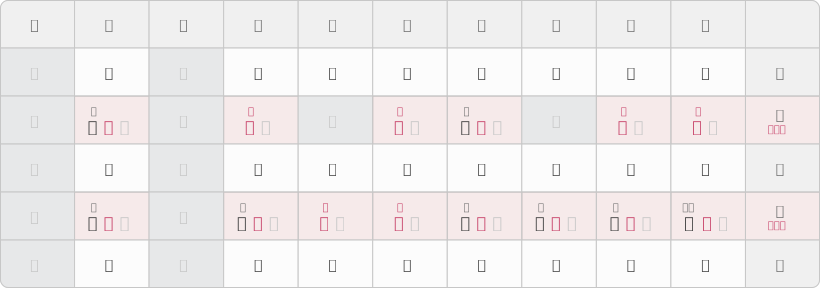
Por otro lado, los Verbos う se llaman «de cinco filas» porque sus conjugaciones posibles cubren las cinco filas de la tabla kana, como podemos ver a continuación.
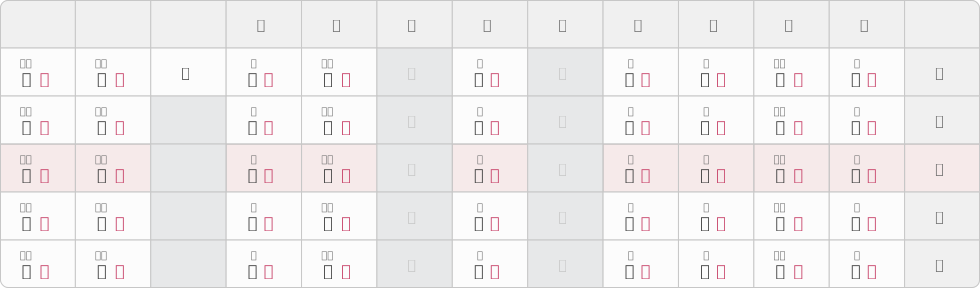
Así, obtenemos una serie de formas posibles a las que se pueden unir los verbos auxiliares: una sencilla, para los Verbos る, y una un poco más complicada, para los Verbos う.
Para los Verbos る, obtenemos una raíz multiusos.
-
- + …
-
- + …
-
- + …
-
- + …
-
- + …
Para los Verbos う, obtenemos cinco conjugaciones posibles, que corresponden a las columnas y filas de la tabla kana de arriba. En este caso, tenemos las posibilidades de 話す, «hablar».
-
さ
- + …
-
し
- + …
-
す
- + …
-
せ
- + …
-
そ
- + …
Y ahora, sumamos algo más...
Una vez que tenemos la forma inicial correcta, simplemente pegamos el verbo auxiliar que queramos usar sobre la conjugación correspondiente. Por ejemplo, ya conocemos ます y ない (y la forma negativa de ます, ません).
-
- +ない「+です」
-
- +ます
- +ませ+ん
-
- +る
-
- + …
-
- + …
-
さ
- +ない「+です」
-
し
- +ます
- +ませ+ん
-
す
- + …
-
せ
- + …
-
そ
- + …
Practicar, practicar, practicar
La conjugación verbal en japonés es, en general, muy predecible, y se puede dominar rápido con un poco de práctica.
En las Guías que cubren reglas de conjugación vas a encontrar un enlace a nuestro juego de conjugación, Kaijugation. Sigue el enlace de abajo para seguir practicando la conjugación de esta Guía.
¿Cuándo florece el cerezo?
--:--
娘:「これは木?」
母:「うん!桜の木ね。」
娘:「桜の木は大きいね!花が咲く?」
母:「そう!春、花が咲くよ!今日は咲かないよ。」
娘:「今日は花が見えない?」
母:「そうです。秋は花が見えません。春、花が開くよ。」
娘:「早くきれいな花が欲しいね〜!」